
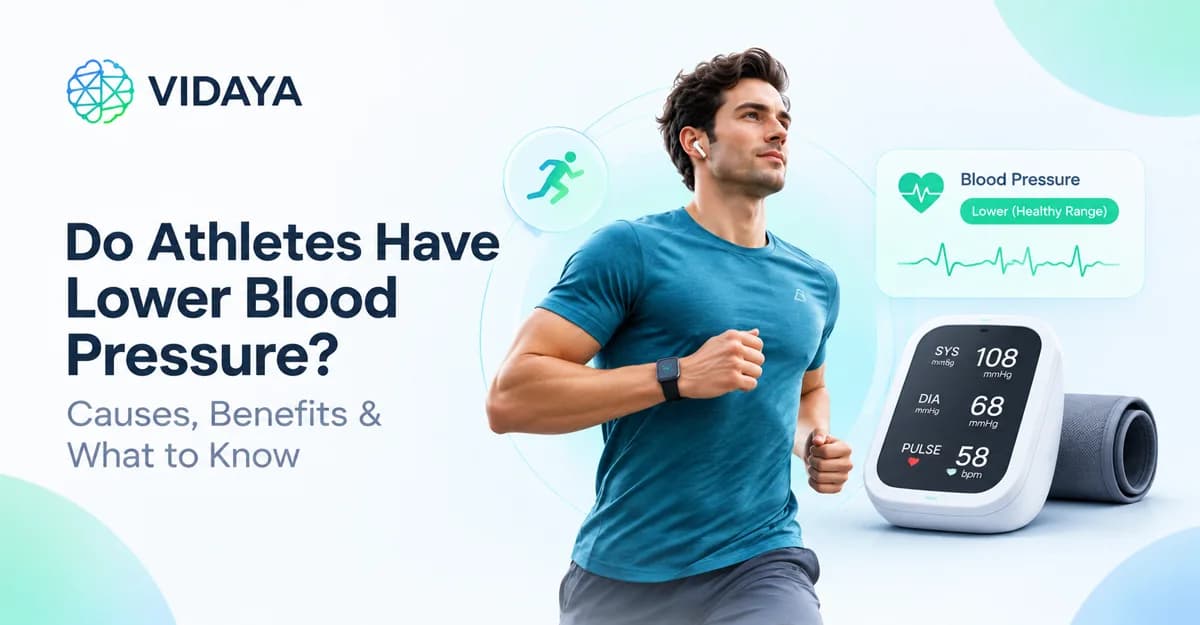
Do Athletes Have Low Blood Pressure? Causes, Benefits & What to Know
A marathon runner straps on a home cuff after a rest day. The screen reads 105/65 mmHg. Is that the mark of a well-trained heart, or the first hint that something is off?
The honest answer is that it depends. Athletes often show resting heart rates and blood pressure readings that would look unusual in someone who rarely exercises. Training genuinely changes how the cardiovascular system works. But a low number on its own says very little about whether a person is healthy.
This article looks at why athletes tend to run lower, where the line for hypotension sits, which symptoms matter, and how blood tests can fill in what a cuff can't.
Do Athletes Have Lower Blood Pressure Than Non-Athletes?
Many do. Regularly trained people, and endurance athletes in particular, often have lower resting blood pressure than less active people. Runners, cyclists, and swimmers are the classic examples.
The reason is adaptation. Ask the heart and blood vessels to work hard week after week, and they get better at the job. The heart pumps more efficiently. The vessels respond more readily and offer less resistance to flow.
The research backs this up. A 2023 systematic review and network meta-analysis in the British Journal of Sports Medicine pooled 270 randomized controlled trials covering more than 15,800 people. Every type of exercise training it looked at lowered both resting systolic and diastolic pressure.
Still, fitness isn't a guarantee. Genetics, age, body composition, training style, medication, and existing conditions all shape an individual's reading. Plenty of fit people have high blood pressure. Being in shape lowers the risk of hypertension. It doesn't rule it out.
What Counts as Low Blood Pressure?
A quick refresher on the numbers helps here.
Blood pressure is the force of blood pushing against artery walls, and it's written as two figures:
Systolic pressure (the top number): pressure while the heart contracts.
Diastolic pressure (the bottom number): pressure while the heart relaxes between beats.
So 110/70 mmHg means a systolic pressure of 110 and a diastolic pressure of 70.
The Mayo Clinic describes low blood pressure, or hypotension, as generally anything below 90/60 mmHg. A rough adult reference looks like this:
Reading | General interpretation |
Below 90/60 mmHg | Low blood pressure |
About 90/60 to 119/79 mmHg | Generally healthy range |
120–129 systolic and below 80 diastolic | Elevated |
130/80 mmHg or higher | Possible hypertension |
These are broad reference points, not a diagnosis. Different organizations draw the lines slightly differently.
And one reading under 90/60 doesn't make an athlete unwell. Some people simply live at the low end without any trouble. The more useful questions are whether that reading is normal for that person, and whether it comes with dizziness, weakness, or fainting.
Why Training Lowers Blood Pressure
Several changes work together. None of them is exotic. They're what the body does when it's given a steady, demanding workload.
1. The Heart Gets More Efficient
Endurance training increases stroke volume, the amount of blood pushed out with each beat. When every beat moves more blood, the heart can afford to beat less often.
That's why trained endurance athletes often have strikingly low resting heart rates.
One caution: heart rate and blood pressure are separate measurements. A resting pulse of 45 doesn't mean blood pressure is low too.
2. Blood Vessels Work Better
Regular exercise improves endothelial function, meaning how well the inner lining of the blood vessels controls their width.
Healthy vessels widen and narrow as the body needs. When overall resistance drops, the heart pushes against less of it, and resting pressure can fall.
3. The Nervous System Rebalances
The autonomic nervous system runs the body's automatic functions, including heart rate and vessel tone. It has two branches. The sympathetic side gears the body up for effort and stress. The parasympathetic side handles rest and recovery.
In well-trained endurance athletes, stronger parasympathetic activity at rest is one of the reasons the resting heart rate drops. It's part of why their resting numbers can look so different from those of sedentary people.
4. Arteries Offer Less Resistance
This isn't only an elite-athlete story. The same BJSM review found that aerobic, dynamic resistance, combined, and high-intensity interval training all reduced resting blood pressure. Isometric work, such as wall squats and plank holds, showed the largest effect of all.
In other words, someone who trains consistently for general fitness can see the benefit too.
Is Low Blood Pressure Good for Athletes?
Often, yes. A lower resting pressure can reflect a cardiovascular system that has adapted well.
The key is separating naturally low blood pressure from hypotension that causes symptoms.
Signs a low reading is probably fine:
The athlete has steady energy through the day.
Workouts feel normal.
Dizziness is rare or absent.
Readings stay fairly consistent.
A doctor has no concerns about their heart health.
Signs it may need a closer look:
Regular dizziness on standing.
Fatigue with no clear explanation.
Unusual weakness during training.
Blurred vision or trouble concentrating.
Fainting.
The American Heart Association notes that low blood pressure usually isn't a problem unless it causes symptoms or points to an underlying condition. Lower isn't automatically better. What matters is that blood keeps reaching the organs that need it.
Can Exercise Itself Cause Low Blood Pressure?
Yes, temporarily. Blood pressure can stay below its pre-workout level for a while after exercise, because blood vessels remain dilated. This is called post-exercise hypotension, and in most people it's a normal response.
A few training situations make it more noticeable.
Dehydration and Heavy Sweating
Long sessions and hot conditions drain fluid through sweat. If that fluid isn't replaced, blood volume falls, and so can blood pressure. Dizziness and weakness often follow. MedlinePlus lists heavy sweating during exercise as a common cause of dehydration.
Standing Up Too Fast
Most athletes know the feeling: the session ends, they stand up quickly, and the room tilts for a second.
When blood pressure drops on standing, it's called orthostatic hypotension. Normally the body tightens blood vessels and nudges the heart rate up the moment someone stands. If that adjustment lags, lightheadedness follows.
Hard Training Without Enough Recovery
Heavy training loads the cardiovascular system. Stack it on top of poor hydration, thin nutrition, illness, or too little rest, and symptoms start showing up in performance.
That said, persistent dizziness or weakness shouldn't be written off as "just overtraining." It deserves a proper look.
Which Blood Tests Help Explain Low Blood Pressure in Athletes?
First, a clarification. No blood test measures blood pressure. A cuff does that.
What blood tests can do is check for conditions that may sit behind low blood pressure, fatigue, or poor exercise tolerance. According to the Mayo Clinic, clinicians investigating hypotension may order blood work to look for problems such as anemia or abnormal blood sugar.
These are the markers that come up most often.
1. Complete Blood Count (CBC)
A CBC measures red cells, white cells, hemoglobin, and platelets. For athletes, hemoglobin and hematocrit matter most, since they show the state of the red blood cells.
Low hemoglobin can mean anemia. Depending on its cause and severity, anemia can bring fatigue, weakness, breathlessness, and a drop in exercise capacity.
One low result doesn't prove anemia explains low blood pressure. A clinician needs to read the full count alongside symptoms and other findings.
2. Ferritin and Iron
Iron is needed to make hemoglobin, which carries oxygen around the body.
Endurance athletes in particular have reason to watch their iron, because a shortfall hurts oxygen delivery and performance. Ferritin reflects stored iron. A low ferritin can flag shrinking reserves before hemoglobin moves at all.
There's a catch. Ferritin also rises with inflammation, so it can look normal when stores are actually low. It shouldn't be read in isolation.
3. Electrolytes
Electrolytes keep fluid balance, nerve signals, and muscle contractions on track. A comprehensive metabolic panel (CMP) usually includes:
Sodium
Potassium
Chloride
Calcium
Bicarbonate
Together they give a picture of fluid and electrolyte balance. For heavy sweaters, sodium and fluid losses can become relevant.
Abnormal values can come from dehydration, medications, kidney problems, and more. The number alone can't say which.
4. Glucose
Glucose is the body's main fuel. When it runs low, the symptoms are sweating, shakiness, weakness, and dizziness, which is uncomfortably close to how a brutal workout can feel.
5. Thyroid-Stimulating Hormone (TSH)
The thyroid helps set metabolism and energy use. TSH is the pituitary hormone that tells the thyroid to produce its own hormones.
Thyroid disorders can affect heart rate, energy, and cardiovascular function. The American Heart Association lists an underactive thyroid among the conditions that can lower blood pressure in some people.
None of these tests is a universal checklist. A clinician chooses what to order based on symptoms and history.
Why One Test Never Tells the Whole Story
The most common mistake with health data is treating a single number as the verdict.
Take two athletes. The first has slightly low ferritin but hemoglobin well inside the lab's range. The second has perfect iron markers yet feels drained, because of poor sleep, short recovery, or something else entirely. Neither result, on its own, explains much.
Blood pressure works the same way. One low reading after a hard session usually means nothing. Repeated low readings with dizziness or fainting mean something worth checking.
A sensible way to read any result is to ask three questions:
The reference range: Is it outside the lab's expected range?
The personal trend: Has it changed since previous tests?
The wider picture: Do symptoms, training load, and other markers point the same way?
That context is what turns a flagged number into useful information. A broader walkthrough is available in Vidaya's guide to blood test results explained.
How Athletes Can Monitor Their Blood Pressure
There's no need to check constantly. Occasional readings are enough to build a personal baseline.
The American Heart Association's home-monitoring guidance boils down to a consistent routine:
No exercise, caffeine, or smoking for at least 30 minutes beforehand.
Five minutes of quiet sitting first.
Back supported, feet flat on the floor.
Arm resting at heart level.
A correctly sized upper-arm cuff.
Two readings about a minute apart, both written down.
It also helps to note when symptoms happen: after training, on standing, or on days with poor hydration.
Consistently low readings with no symptoms are worth mentioning at a routine check-up. Repeated symptoms call for a proper assessment, not just more home readings.
When Low Blood Pressure Becomes a Concern
The trigger point is when low blood pressure starts interfering with daily life, training, or general wellbeing.
A medical evaluation makes sense for:
Repeated dizziness or lightheadedness.
Fainting or near-fainting.
Unexplained fatigue that drags down performance.
Blurred vision or confusion.
Persistent weakness.
Symptoms that start suddenly or keep getting worse.
Low blood pressure alongside signs of shock is an emergency. The Mayo Clinic lists those signs as confusion, cold and clammy skin, rapid shallow breathing, and a weak, rapid pulse.
Loading up on salt or supplements to "fix" persistently low pressure isn't a good idea without medical advice. The right approach depends on the cause.
How Vidaya Can Help You Understand Your Blood Test Results
Blood pressure monitoring tells me how strongly blood pushes against artery walls. Blood tests provide a different type of information about what's happening inside the body. Vidaya helps users make sense of their laboratory reports by organizing blood test results and explaining individual markers in context.
Instead of looking at an isolated high or low flag, users can explore what different markers measure and how their results compare with previous reports.
Vidaya also includes Vaya Chat, which gives users a way to ask questions about their blood test data in plain language.
This can be helpful for athletes who want to better understand markers such as:
Hemoglobin and hematocrit.
Ferritin and iron.
Sodium and potassium.
Glucose.
Thyroid markers.
Vidaya is designed to support health understanding, not replace a healthcare professional. It does not diagnose or treat medical conditions.
For a clearer explanation of your laboratory results, you can upload your blood test report to Vidaya.
Final Thoughts
So, do athletes have low blood pressure? Many do, particularly those who train for endurance. Their hearts and blood vessels adapt, and lower resting pressure is often the result.
But the number is only a starting point. Symptoms, hydration, recovery, nutrition, medical history, and blood work all add context. Anyone dealing with repeated dizziness, fainting, or unexplained weakness should talk to a healthcare professional.
A blood pressure reading tells part of the story. The rest of a person's health data tells the rest.
Frequently Asked Questions
Recommended Reading
Hand-picked health intelligence connected to this topic.

Get notified of new posts
Join 100+ health-conscious readers. No spam, just new articles on longevity and optimization.