
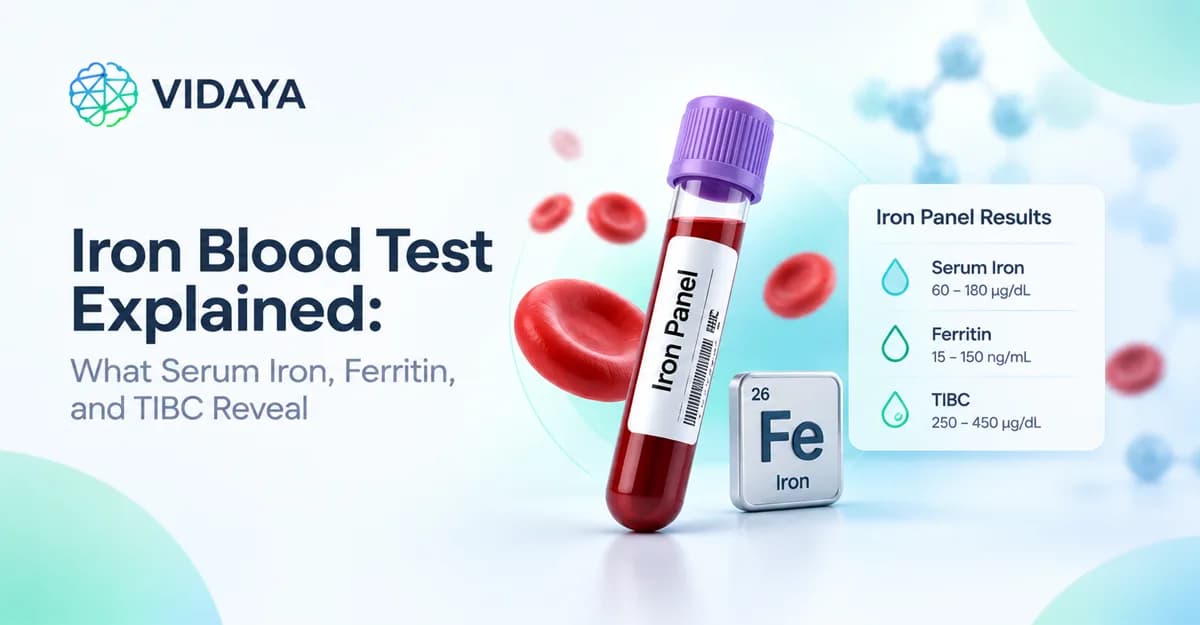
Iron Blood Test Explained: What Serum Iron, Ferritin, and TIBC Reveal
Why can someone with a "normal" iron result still feel exhausted every afternoon? The answer usually sits in the parts of the iron blood test most people skip over. An iron panel does not produce one number. It produces several, and each one describes a different stage of how the body absorbs, moves, and stores iron.
This article explains what each marker in an iron blood test measures, why clinicians order it, how patients should prepare, and how the results are interpreted. It also looks at how digital health tools are changing the way people track iron over months and years, rather than reading a single lab report in isolation.
Why Iron Deserves Attention
Iron sits at the center of hemoglobin, the protein in red blood cells that carries oxygen from the lungs to every tissue. It also supports muscle function, cellular energy production, and immune health.
The body has no efficient way to get rid of excess iron, so balance depends on absorption. Too little iron starves tissues of oxygen. Too much iron gradually accumulates in the liver, heart, pancreas, and joints, where it can cause damage over many years.
Both problems can begin with the same vague complaint: fatigue. That overlap is why clinicians rely on laboratory testing rather than symptoms. The reference point for much of what follows is the MedlinePlus guide to iron tests, published by the U.S. National Library of Medicine.
What an Iron Blood Test Measures
The term "iron blood test" usually refers to a group of related measurements, often called an iron panel or iron studies. A provider may order one test or several, depending on the clinical question. On lab forms, these tests also appear as serum Fe, serum iron, ferritin test, serum ferritin, or TIBC.
Serum Iron
Serum iron is the amount of iron circulating in the liquid portion of the blood at the moment of the draw. It is a snapshot of iron in transit. Because it rises and falls with meals, supplements, and the time of day, clinicians rarely interpret it alone.
Transferrin
Transferrin is the protein that carries iron through the bloodstream to the bone marrow, muscles, and storage sites. When iron runs short, the liver produces more transferrin to capture whatever iron is available. When iron is plentiful, transferrin levels tend to fall.
Total Iron-Binding Capacity (TIBC)
TIBC measures how well iron binds to transferrin and other blood proteins. In practical terms, it reflects how many empty "seats" the iron transport system has. A high TIBC usually signals that the body is seeking more iron. A low TIBC can be associated with iron overload, chronic inflammation, or liver conditions.
Ferritin
Ferritin is the protein that stores iron inside cells. The small amount circulating in blood mirrors total iron reserves. Many clinicians consider ferritin the most useful single marker for catching iron deficiency early, because stores decline well before hemoglobin does.
Ferritin has one important limitation. It is also an acute-phase reactant, meaning it rises during inflammation, infection, and liver stress. A high ferritin value therefore does not automatically indicate excess iron.
Transferrin Saturation
Many laboratories also report transferrin saturation, calculated by dividing serum iron by TIBC. It shows what percentage of transport proteins are actually carrying iron. Low saturation fits with deficiency. Persistently high saturation is one of the earliest signals of hereditary hemochromatosis.
Together, these markers allow a clinician to separate three very different situations: too little iron entering the body, iron trapped by inflammation, and too much iron accumulating. That distinction is the main reason a full panel is more informative than any single value.
Why Clinicians Order Iron Tests
Iron testing is not reserved for people who already feel unwell. According to MedlinePlus, iron tests are commonly used to:
Check for low iron, which can be a sign of anemia, although not everyone with low iron is anemic
Identify the specific type of anemia a patient has
Detect high iron, which may point to hemochromatosis, an iron overload disorder that can be inherited or caused by another condition
Assess liver iron stores when liver disease is suspected
Help evaluate restless legs syndrome and adult-onset Still disease, an inflammatory condition marked by very high ferritin, joint pain, fever, and rash
Monitor whether iron supplements, infusions, or other treatments are working
Low iron often produces no obvious symptoms until it becomes quite severe. For that reason, providers may include iron studies in routine bloodwork, particularly for higher-risk groups.
Groups at Higher Risk
Certain groups are more likely to develop low iron or benefit from periodic checks:
People who menstruate, especially those with heavy periods
Pregnant people, whose iron requirements rise sharply
Vegetarians and vegans, because plant-based iron is absorbed less efficiently than iron from meat
Endurance athletes, who lose iron through sweat, repetitive impact on red blood cells, and minor gastrointestinal bleeding
Frequent blood donors
People with celiac disease, inflammatory bowel disease, or a history of weight-loss surgery
Anyone with a family history of hemochromatosis
Symptoms of Low Iron
When iron falls, tissues receive less oxygen. MedlinePlus lists these common signs:
Weakness or fatigue
Dizziness
Shortness of breath
Arrhythmia, an irregular heart rate or rhythm
Patients also frequently report pale skin, cold hands and feet, brittle nails, headaches, hair shedding, and cravings for ice.
Symptoms of High Iron
Iron overload tends to develop slowly over years. Possible symptoms include:
Weakness or fatigue
Joint pain, often in the knees or hands
Abdominal pain
Loss of sex drive or erectile dysfunction
Skin color changes that can appear gray, metallic, or bronze
Fatigue appears on both lists. This overlap explains why symptoms cannot reliably indicate which direction iron levels are moving. Only laboratory testing can make that distinction.
How Patients Prepare for an Iron Blood Test
Serum iron is unusually sensitive to food and timing, so small preparation steps make results more reliable.
Fasting: Providers may ask patients to avoid food and drinks other than water for about 12 hours before the draw. An iron-rich meal can temporarily raise serum iron.
Morning draws: Iron tests are usually scheduled in the morning, when levels tend to run higher. Testing at a consistent time also makes year-over-year comparisons fairer.
Supplements and medicines: Patients are often told to pause iron supplements or multivitamins containing iron before testing. Many providers suggest a gap of at least 24 hours, though instructions vary.
Recent illness or hard exercise: Infections and intense training sessions can raise ferritin for several days. Clinicians generally want to know about these before interpreting a result.
Specific instructions depend on which tests appear on the order, so patients are encouraged to confirm preparation steps with their provider or the laboratory.
What Happens During the Blood Draw
An iron test is a standard blood draw. A health care professional cleans an area of the arm, inserts a small needle into a vein, and collects blood into one or more tubes. Most people feel a brief sting. The procedure usually takes less than five minutes.
The risks are minimal. Some people notice slight pain or a small bruise at the needle site, which typically fades quickly. People prone to fainting during blood draws can ask to lie down.
Results often arrive within one to several days. Increasingly, patients see their numbers in an online portal before speaking with a clinician. That gap is where confusion tends to appear, and where platforms such as Vidaya's AI-powered blood test analysis aim to help by explaining each biomarker in plain language ahead of the follow-up appointment.
How Iron Test Results Are Interpreted
No single value tells the whole story. Clinicians read iron results alongside symptoms, age, sex, medical history, and other blood tests. Reference ranges also differ between laboratories, so each result should be compared with the range printed on the patient's own report.
The figures below are approximate adult ranges commonly used by labs. They offer general orientation, not diagnostic thresholds.
Marker | Typical adult range (approximate) | What it reflects |
Serum iron | 60–170 mcg/dL | Iron circulating at the time of the draw |
TIBC | 240–450 mcg/dL | Capacity to transport iron |
Transferrin saturation | 20–50% | Share of carriers holding iron |
Ferritin (men) | about 24–336 ng/mL | Stored iron |
Ferritin (women) | about 11–307 ng/mL | Stored iron |
What Low Results May Indicate
According to MedlinePlus, low iron levels may point to:
Iron deficiency anemia, the most common form of anemia worldwide
Another type of anemia, such as anemia related to chronic disease
Thalassemia, an inherited blood disorder that reduces the number of healthy red blood cells
The classic iron deficiency pattern combines low ferritin, low serum iron, high TIBC, and low transferrin saturation. Ferritin often falls first, sometimes months before hemoglobin drops far enough to meet the definition of anemia.
What High Results May Indicate
High iron levels may be associated with:
Hemochromatosis, in which the body absorbs and stores too much iron
Lead poisoning
Liver disease
High transferrin saturation combined with high ferritin raises suspicion of true iron overload. High ferritin with normal saturation more often reflects inflammation, metabolic stress, alcohol use, or fatty liver disease.
Common Result Patterns
Pattern | Serum iron | TIBC | Saturation | Ferritin |
Iron deficiency | Low | High | Low | Low |
Anemia of inflammation | Low | Low or normal | Low or normal | Normal or high |
Iron overload | High | Low or normal | High | High |
Inflammation without overload | Normal or low | Normal | Normal | High |
Factors That Can Skew Results
An abnormal value does not always signal a serious condition. Several everyday factors can shift iron numbers:
Birth control pills and estrogen therapy can raise TIBC and transferrin
Iron levels can dip during menstrual periods
Iron naturally fluctuates over the course of a day
A recent supplement or iron-rich meal can temporarily lift serum iron
Infections, injuries, and strenuous exercise can elevate ferritin
Most causes of abnormal iron are treatable. Depending on the cause, options include supplements, dietary changes, medicines, scheduled blood removal for overload, or treatment of the underlying condition. The appropriate approach is a decision for the treating clinician.
Tests Often Ordered Alongside an Iron Panel
Iron studies are rarely interpreted on their own. MedlinePlus notes that providers may also order:
Hemoglobin, the oxygen-carrying protein in red blood cells
Hematocrit, the percentage of blood made up of red blood cells
Complete blood count (CBC), a broad view of red cells, white cells, and platelets
Mean corpuscular volume (MCV), the average size of red blood cells; small cells often accompany iron deficiency or thalassemia
When overload is suspected, clinicians may also test for changes in the HFE gene, the most common cause of hereditary hemochromatosis. For people who have already completed consumer genetic testing, tools such as Vidaya's DNA analysis can surface iron-related variants worth raising with a doctor. A genetic finding alone is not a diagnosis, but it can help explain a transferrin saturation that keeps creeping upward.
Why Iron Trends Matter More Than Single Results
One iron test is a snapshot. A sequence of tests is a timeline. Serum iron shifts with meals, menstrual cycles, and time of day, so a single reading can mislead. Ferritin measured across months, however, shows whether stores are draining, holding steady, or responding to treatment.
A common example involves recreational runners. A runner records a ferritin of 28 ng/mL, which many labs flag as normal. A year later the value is 18, then 12. Each report looks unremarkable in isolation. Plotted together, the results show stores being used faster than they are replaced. Catching that pattern early can mean a simple dietary adjustment instead of months of unexplained fatigue.
The same logic applies in reverse. Patients on iron supplements need follow-up testing to confirm levels are rising and not overshooting. People with hemochromatosis depend on regular ferritin and saturation checks to guide treatment frequency.
Practical Steps After Receiving Results
A few habits help patients get more value from iron testing:
Review the full panel together: Ferritin, saturation, and TIBC carry more meaning as a set than any one flagged value.
Record the testing conditions: Fasting status, time of day, recent illness, and supplement use make future comparisons fair.
Prepare specific questions: Examples include "Is this ferritin low enough to explain the fatigue?" or "Should inflammation be checked?"
Avoid self-treating with high-dose iron: Supplementing without a confirmed deficiency can be harmful, particularly when overload has not been ruled out.
Retest at sensible intervals: Clinicians typically recheck iron a few months after starting treatment.
For unfamiliar terms on a lab report, AI assistants such as Vaya Chat, Vidaya's health assistant, can explain the language and help patients prepare questions. These tools support the conversation with a clinician rather than replace it.
Diet and Iron Absorption
When a provider confirms low iron, diet is often part of the plan. Heme iron from red meat, poultry, and fish is absorbed most efficiently. Non-heme iron from beans, lentils, tofu, spinach, and fortified cereals is absorbed less readily, but pairing it with vitamin C sources such as citrus, peppers, or tomatoes improves uptake. Coffee, tea, and calcium-rich foods can reduce absorption when consumed in the same meal.
Conclusion
An iron blood test is one of the simplest and most informative checks in routine medicine. With less than five minutes of needle time, it shows whether the body has too little iron, too much, or iron locked away by inflammation. Its value depends on reading the markers together, testing under consistent conditions, and following trends rather than reacting to one result.
People with persistent fatigue, risk factors for deficiency, or a family history of hemochromatosis are good candidates for a conversation with a clinician about iron testing. Once results arrive, context matters. Iron numbers carry the most meaning when viewed alongside the rest of a person's health data.
Turn Iron Results Into a Long-Term Health Picture With Vidaya
A single iron panel answers one question at one point in time. Vidaya is built to answer the bigger one: how iron and every other biomarker change over months and years. The platform brings blood test results, DNA insights, wearable data, and body composition scans into one dashboard, so a falling ferritin or a rising transferrin saturation shows up as a trend rather than a buried line on a PDF.
With Vidaya, users can:
Upload lab reports and see each iron marker explained in plain language
Track ferritin, serum iron, and saturation across every test they have taken
Connect wearables to see how iron status lines up with sleep, resting heart rate, and recovery
Ask Vaya Chat questions about their results and prepare for appointments with a clinician
Plans start at $10 per month or $89 per year, with a 30-day money-back guarantee.
Start Tracking Iron and Other Biomarkers With Vidaya→
Frequently Asked Questions
Recommended Reading
Hand-picked health intelligence connected to this topic.

Get notified of new posts
Join 100+ health-conscious readers. No spam, just new articles on longevity and optimization.