
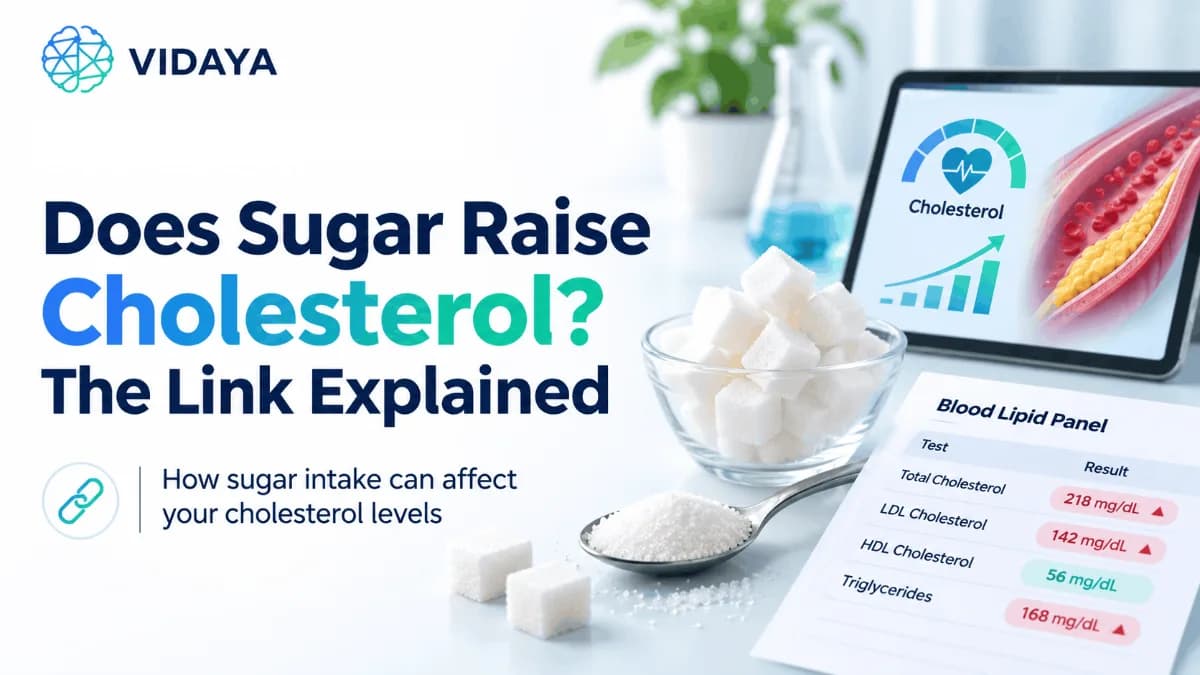
Does Sugar Raise Cholesterol? The Link Explained
For decades, the conversation around high cholesterol focused almost entirely on dietary fat. Eggs, butter, and red meat took most of the blame, while sugar was treated as a problem mainly for teeth and waistlines. That picture has changed. A growing body of research shows that sugar, especially the added kind found in soft drinks, packaged snacks, and desserts, plays a meaningful role in how the body produces and handles blood fats.
So, does sugar raise cholesterol? The short answer is yes, though not in the simple way many people imagine. Sugar does not contain cholesterol. Instead, a diet high in added sugar changes how the liver behaves. It pushes the liver to make more fat, raises triglycerides, lowers HDL (the protective kind of cholesterol), and can shift LDL particles toward a more harmful form.
For health-conscious adults who track their wearables, review their blood work, and care about long-term healthspan, this matters. A lipid panel is one of the most common lab tests people receive, and the numbers on it respond to daily food choices more than many realize. This article explains how sugar and cholesterol are connected, what the research says, who is most at risk, and which practical changes tend to move the numbers in the right direction.
Understanding Cholesterol: The Basics
Cholesterol is a waxy, fat-like substance that every cell in the body needs. It helps build cell membranes, produce hormones such as estrogen and testosterone, and make vitamin D and bile acids for digestion. The liver makes most of the cholesterol the body uses. Only a smaller share comes directly from food.
Because cholesterol does not dissolve in blood, it travels inside particles called lipoproteins. A standard lipid panel reports several of these markers:
Marker | What it is | General target for adults |
LDL cholesterol | Low-density lipoprotein, often called "bad" cholesterol. It can deposit cholesterol into artery walls. | Below 100 mg/dL |
HDL cholesterol | High-density lipoprotein, often called "good" cholesterol. It helps carry excess cholesterol back to the liver. | 40 mg/dL or higher for men; 50 mg/dL or higher for women |
Triglycerides | The most common type of fat in the blood, used to store extra energy. | Below 150 mg/dL |
Total cholesterol | The combined measure of cholesterol in the blood. | Below 200 mg/dL |
VLDL | Very-low-density lipoprotein, which carries triglycerides made by the liver. | Usually estimated from triglycerides |
Targets vary with age, family history, and existing conditions, so a doctor may set different goals for a specific person.
The key idea is balance. High LDL, high triglycerides, and low HDL together form a pattern doctors call atherogenic dyslipidemia. This pattern encourages plaque to build up in the arteries over time. Plaque narrows blood vessels and raises the risk of heart attack and stroke.
High cholesterol usually causes no symptoms. Most people only find out through a blood test. For readers who want to make sense of their own lab report, Vidaya's guide on how to read blood test results walks through common markers and what they mean.
How Sugar Affects Cholesterol
Sugar affects cholesterol indirectly, through the liver. When a person eats more sugar than the body can use or store as glycogen, the liver converts the surplus into fat. Scientists call this process de novo lipogenesis, which simply means "making new fat." That new fat is packaged into triglycerides and shipped into the bloodstream inside VLDL particles.
Several effects follow from this one process.
1. Triglycerides Rise
The most direct effect of excess sugar is higher blood triglycerides. Extra calories from sugar get turned into fat, and sugar also interferes with an enzyme the body relies on to clear triglycerides from the blood. The result is that more triglycerides are made and fewer are broken down.
2. HDL Cholesterol Falls
Diets high in added sugar are linked with lower HDL levels. When triglyceride-rich particles stay in the blood longer, they swap contents with HDL particles. This makes HDL smaller and easier for the body to clear, which lowers the HDL number on a lab report. Less HDL means less capacity to move cholesterol away from the arteries.
3. LDL Becomes More Harmful
Excess sugar can nudge LDL cholesterol upward, but the bigger concern is LDL quality. A high-sugar diet tends to produce small, dense LDL particles. These particles slip into artery walls more easily and are more prone to oxidation, which makes them more likely to form plaque. Two people with the same LDL number can carry very different risk depending on particle size and count.
4. Fructose Plays a Special Role
Table sugar (sucrose) is half glucose and half fructose. High-fructose corn syrup contains a similar or slightly higher share of fructose. Glucose can be used by almost every cell in the body. Fructose, in contrast, is processed mainly by the liver. When large amounts arrive at once, as with a sugary drink, the liver is especially likely to convert fructose into fat.
This is one reason sugar-sweetened beverages get so much attention. Liquid sugar is absorbed quickly, does not make people feel full, and delivers a concentrated dose of fructose to the liver.
5. Weight Gain and Insulin Resistance Add to the Effect
High sugar intake often leads to extra calories and weight gain, particularly around the abdomen. Over time, it can also contribute to insulin resistance. Both conditions push triglycerides higher and HDL lower, reinforcing the same unhealthy lipid pattern.
What the Research Says
The link between sugar and cholesterol is not just theory. Several well-known studies have measured it directly.
The NHANES Study on Added Sugars
One of the most cited studies was published in JAMA in 2010 by researchers at Emory University. They analyzed data from 6,113 U.S. adults in the National Health and Nutrition Examination Survey. On average, participants got about 15.8% of their daily calories from added sugars, or roughly 21 teaspoons a day.
The results showed a clear pattern. As added sugar intake rose, HDL cholesterol steadily fell and triglycerides climbed. People who got 25% or more of their calories from added sugar had average HDL levels of 47.7 mg/dL, compared with 58.7 mg/dL in those who got less than 5%. Triglycerides were also higher in the high-sugar group, at 114 mg/dL versus 105 mg/dL. Among women, LDL levels rose modestly as sugar intake increased.
Because this was an observational study, it shows an association rather than proof of cause. Still, the dose-response pattern, where more sugar tracked with worse numbers, made the findings hard to dismiss.
Controlled Trials on Fructose and Glucose
Controlled feeding studies help fill in the cause-and-effect picture. In a widely discussed 10-week trial by Stanhope and colleagues, overweight adults drank beverages sweetened with either fructose or glucose, providing 25% of their daily energy. The fructose group showed increases in LDL cholesterol, small dense LDL, oxidized LDL, apolipoprotein B, and remnant triglycerides. These are all markers linked to higher cardiovascular risk. The glucose group did not show the same changes.
A later randomized trial in Switzerland followed 94 healthy young men for seven weeks. Participants drank moderate amounts of beverages sweetened with fructose, sucrose, or glucose, roughly equal to the sugar in two cans of regular soda per day. The researchers found that fructose- and sucrose-sweetened drinks increased fat production in the liver, while glucose-sweetened drinks did not.
What this Means in Practice
Taken together, the research suggests three things. First, high added sugar intake is consistently linked with lower HDL and higher triglycerides. Second, fructose, which makes up about half of table sugar, seems to be the main driver of increased fat production in the liver. Third, these effects can appear within weeks, even in young and healthy people.
It is worth noting that some scientists still debate how much sugar itself, apart from extra calories and weight gain, is responsible. In real life, though, the two usually go together. People who consume a lot of added sugar often eat more calories overall, which compounds the problem.
Not All Sugar Is the Same
One common point of confusion is whether all sugar affects cholesterol equally. It does not. The context in which sugar is eaten matters a great deal.
Natural Sugars vs. Added Sugars
Natural sugars occur in whole foods such as fruit, vegetables, and plain dairy. A whole apple contains fructose, but it also delivers fiber, water, vitamins, and plant compounds. Fiber slows digestion, so the sugar reaches the liver gradually rather than all at once. Soluble fiber, found in apples, oats, and beans, can even help lower LDL cholesterol.
Added sugars are sugars and syrups put into foods during processing or preparation. They provide calories without meaningful nutrients. Common examples include white sugar, brown sugar, honey, maple syrup, agave nectar, and high-fructose corn syrup. Honey and agave are often marketed as healthier, but the body handles them much like table sugar.
Where Hidden Sugar Shows up
Many people associate sugar with candy and desserts, but a large share comes from less obvious foods:
Sweetened coffee drinks, energy drinks, sports drinks, and bottled iced teas
Flavored yogurts and "protein" yogurts
Breakfast cereals and granola, including those labeled "whole grain"
Granola bars, protein bars, and snack bars
Pasta sauces, ketchup, barbecue sauce, and salad dressings
Packaged bread, especially sandwich bread and buns
Fruit juices and smoothies, even with no sugar added, since juicing removes most fiber
On ingredient labels, sugar can appear under dozens of names. Words ending in "-ose" (dextrose, maltose, sucrose), as well as cane juice, rice syrup, malt syrup, and fruit juice concentrate, all count as added sugar.
How Much Added Sugar is too Much?
The American Heart Association recommends no more than 6 teaspoons (about 25 grams) of added sugar per day for women and no more than 9 teaspoons (about 36 grams) for men. For comparison, a single 12-ounce can of regular soda contains around 39 grams of sugar, which is more than a full day's limit for most adults.
According to WebMD, the average American consumes about 22 teaspoons of added sugar daily, adding up to roughly 350 extra calories. That is more than three times the recommended limit for women.
Refined carbohydrates such as white bread, white rice, and pastries behave similarly to sugar once digested. They break down quickly into glucose and can raise triglycerides, so they are worth limiting alongside obvious sweets.
Who Is Most at Risk?
Sugar affects everyone's lipids to some degree, but certain groups tend to see stronger effects:
People with insulin resistance or prediabetes:
When cells respond poorly to insulin, the liver keeps producing fat even when it should slow down. These individuals often show high triglycerides and low HDL first.
People with type 2 diabetes:
Diabetes and abnormal cholesterol frequently appear together, and both raise cardiovascular risk.
People carrying extra abdominal weight:
Visceral fat, the fat around internal organs, is closely tied to fatty liver and an unhealthy lipid profile.
People with non-alcoholic fatty liver disease
A liver already storing excess fat is more sensitive to the effects of fructose.
People with a family history of heart disease or high cholesterol
Genetics can amplify the effects of diet on blood lipids.
People who drink alcohol regularly
Alcohol, like sugar, is processed in the liver and can raise triglycerides, especially when combined with sweet mixers.
Highly active people who rely on sugary fuel
Athletes generally handle sugar better, but those who eat large amounts of gels, sports drinks, and sweetened snacks outside of training can still see lipid changes.
Age matters too. Lipid levels naturally shift as people get older, and women often see LDL rise after menopause. Regular testing helps catch these changes early. WebMD notes that adults over 20 should get their cholesterol checked every four to six years, and more often if they have risk factors.
For people interested in longevity, these markers do more than predict heart disease. Blood lipids, blood sugar, and inflammation all contribute to how quickly the body ages. Vidaya's explainer on what biological age is and how it is measured shows how lab markers like these feed into a bigger picture of long-term health.
Practical Ways to Cut Sugar and Improve Cholesterol
The encouraging news is that sugar-related lipid changes often respond quickly to diet. Triglycerides in particular can drop noticeably within a few weeks of cutting back. The following steps are among the most effective.
1. Start with Drinks
Sugar-sweetened beverages are the single largest source of added sugar for many adults. Swapping soda, sweet tea, and flavored coffee drinks for water, sparkling water, or unsweetened tea removes a large dose of liquid fructose. This one change often produces the biggest early improvement in triglycerides.
2. Read Nutrition Labels
Nutrition labels in many countries now list "added sugars" separately from total sugars. Comparing products side by side makes it easy to choose a plain yogurt over a flavored one, or a low-sugar cereal over a frosted one. Checking the ingredient list for hidden sugar names helps too.
3. Choose whole Foods and Fiber
Building meals around vegetables, legumes, whole grains, nuts, seeds, and whole fruit naturally reduces added sugar. These foods are also rich in fiber, which slows sugar absorption and helps lower LDL. Oats, barley, beans, lentils, and apples are particularly good sources of soluble fiber.
4. Swap Refined Carbs for Complex ones
White bread, white rice, and pastries act much like sugar once digested. Replacing them with whole-grain bread, brown rice, quinoa, or sweet potatoes keeps blood sugar steadier and helps lower triglycerides. Low-glycemic foods are generally a better choice for people watching their lipids.
5. Pair Carbohydrates with Protein and Healthy fats
Eating carbohydrates alongside protein, fiber, or healthy fats slows digestion and blunts blood sugar spikes. Adding nuts to oatmeal or eating fruit with a handful of almonds are simple examples. Olive oil, avocado, nuts, and fatty fish also support healthier HDL levels.
6. Limit Alcohol
Alcohol raises triglycerides, and cocktails often combine alcohol with sugary mixers. Cutting back can lead to noticeable improvements, especially for people whose triglycerides are already high.
7. Move More
Regular physical activity helps the body use glucose more efficiently, lowers triglycerides, and can raise HDL. Most guidelines recommend at least 150 minutes of moderate exercise per week, such as brisk walking, cycling, or swimming, along with some strength training. Even a short walk after meals can help reduce blood sugar spikes.
8. Track Progress with Data
Changes in diet are easier to sustain when people can see results. Retesting a lipid panel a few months after cutting sugar shows whether triglycerides, HDL, and LDL are moving in the right direction. Many people also find it useful to compare these lab results with daily data from wearables, such as activity levels, sleep, and glucose readings.
This is where a platform like Vidaya can help. With Vidaya's blood test tracking, users can upload lab results and see markers like triglycerides and HDL scored against optimal ranges over time. Combining lab work with wearable data also gives a fuller picture. Vidaya's article on what a wearable can tell users that labs cannot, and the other way round explains why both sources of data matter.
These tools support conversations with a doctor. They do not replace medical advice, diagnosis, or treatment.
When Diet is not Enough
For some people, especially those with genetic conditions such as familial hypercholesterolemia, diet and exercise alone will not bring cholesterol to a safe level. Doctors may recommend medication such as statins alongside lifestyle changes. Cutting sugar still helps in these cases, particularly for triglycerides and HDL, but it should be part of a plan agreed with a healthcare professional.
The Bottom Line
Sugar does raise cholesterol, though mostly by changing the way the liver makes and handles fat rather than by adding cholesterol directly. High intake of added sugar, and fructose in particular, increases triglycerides, lowers protective HDL, and promotes smaller, denser LDL particles. Together, these changes create a lipid profile linked with heart disease and stroke.
The good news is that this pattern can often be reversed. Cutting sugary drinks, choosing whole foods over processed ones, limiting refined carbohydrates and alcohol, and staying active can improve lipid levels within weeks. Regular blood tests show whether those changes are working.
For anyone focused on longevity and long-term health, sugar intake deserves as much attention as dietary fat. Small, steady changes to daily habits, backed by real data from lab results, can make a lasting difference to heart health.
Take Control of Your Health Journey with Vidaya!
Your health deserves more than guesswork. With Vidaya, you can better understand your blood test results, track important health markers, and make informed decisions for long-term wellness. Have questions about your health data or how Vidaya works? Our integrated Vaya Chat Assistant is here to help! Simply start a conversation to get quick answers, explore platform features, and find guidance on making the most of your health insights.
Ready to take a smarter approach to your health? Start chatting with Vaya today and discover a better way to understand your health!
Your Personal Health Assistant is Just a Chat Away!
Frequently Asked Questions
Recommended Reading
Hand-picked health intelligence connected to this topic.


Get notified of new posts
Join 100+ health-conscious readers. No spam, just new articles on longevity and optimization.